On the traditional, vernacular, and contemporary

Last December, Whiteboard Journal reached out to me for an interview about trends and issues faced by architects in Indonesia. My answers to their questions were posted in entirety on the article. (Had I known the whole thing would be posted verbatim I wouldn’t have rambled TL;DR with my answers? Sorry, readers!!)

I decided to translate my answers here with edits for clarity, one post for each long answer. You can read the Bahasa Indonesia version on Whiteboard Journal, otherwise read more below.

WHITEBOARD: Do you think it’s possible to merge traditional and contemporary design without removing the originality of traditional design? If possible, how so?

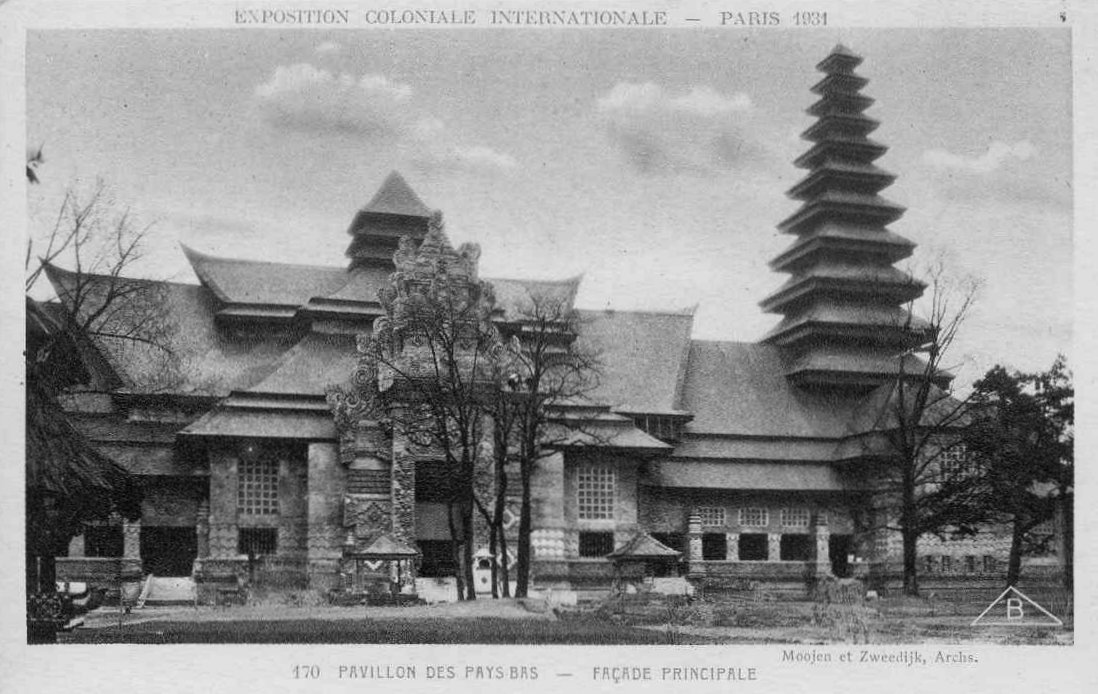
Our understanding of what we call traditional, contemporary, or original in architecture needs further scrutiny. For example, when we speak of tradition, we may be thinking of “traditional houses” that are associated with cultural groups or areas in Indonesia.

Perspectives on Practice: “Narasi Arsitektur” Podcast by bvnd

When I read news about architecture becoming the #1 most-coveted faculty at my alma mater, I wondered about what factors could have made it happen. This was despite architectural studies being presented in bad light for a political campaign last year, which illustrated how today’s university graduates have difficulty finding employment. The sentiment was denied (unsatisfactorily, according to me and my peers) by the chairman of the Indonesian Institute of Architects. Perhaps, this is merely testament to how “all press is good press”. [I want to hear your view if you are a student interested in architecture — drop a comment below or reach me elsewhere.]

But it is well-known that the majority of architecture school graduates in Indonesia don’t end up becoming architects. The head of the architecture department at the University of Indonesia stated that only 50-60% of their graduates go on to practice in their field. He did not cite architecture-specific tracer studies, so I would even hazard to say that 60% is an exaggerated percentage. For regions outside of Java-Bali, some schools even state that around 40% of their graduates are not absorbed into the job market at all. Several factors were mentioned to contribute to this problem, including the legal trickeries of the construction system which often hurts architects, as well as the difficulty of completing architectural studies itself.

Natural Light

The rich and poor alike desire to bring light into their homes. It is always a question of scale. “Skylight” is stifling in small quarters, but transformative in wide expanses. Imagine knowing any difference.

Our nights and days are roughly equal throughout the year, and when we close our eyes we access another world. Even in escape, we are tracing the same margins, warping its stories.

We call the punctured innards of our compressed, skyward-germinating houses by a poetic name: light wells, as if light pertains to attempts at mining. Think: canary in coalmine. Oh to thrive in a landscape of budding decay. Even if a projection needs some sort of medium to reflect it back, will the burden of place fold in the corners of your mind? When enclosures are given windows, limits dissolve, but do not unravel.

Here is a path, paved with good intentions. I think of trajectory as something spat out. Flung forth, instead of flight. Go ahead, be my guest. I will recognise the fall of your footsteps by the time you reach the stairs, and I will look up.

The light doesn’t trap, it merely grazes you on the cheek, asking “How do you like the view?” over and over like a metronome or maybe a pulse.

(2018)

Addendum: In November 2018, my very talented friend katcrunch created the following beautiful illustrations based on a snippet of this poem. Please enjoy.

Early-generation Indonesian architects on their approaches of creation

Note: I wrote this in 2015 for a class assignment, and decided to repost it here because the content of this seminar has valuable points for Indonesian architectural discussion. Two of the notable architecture figures who spoke in this event, Achmad Noe’man and Sandi A. Siregar, are sadly no longer with us, and this post is dedicated to their memory. [Versi Bahasa Indonesia tersedia di akhir artikel.]

What makes good architecture? That is a question those in the architectural profession, be it in the realm of academics or in practise, seek to answer time after time. And as history tells us, the answer is hardly a simple set of principles that are universal and applicable over time; rather, they take the form of various approaches that are coloured by each person’s subjective understanding.

To understand where different preferences in approach are coming from, it is helpful to examine each of their zeitgeist: ideas that were influential at the time, events that had come to shape their social atmosphere, and what ideals were considered desirable to achieve at that time. Such are the matters brought to light in the seminar “Objectivity in Subjectivity” on February 21, 2015, which invited several generations of architecture professionals: those active at the time of its conception in Indonesia and their following generations.

A short prelude on thinking and written documentation

“Writing has nothing to do with signifying. It has to do with surveying, mapping, even realms that are yet to come.” —Deleuze & Guattari, A Thousand Plateaus

To me, writing is the only effective way of thinking. Aren’t there few acts lonelier than thinking to yourself—of absorbing concepts and processing affect in your mind and body? It’s an activity that produces such amorphous fruits of thought, and unfortunately my mind is not rigorous enough to maintain the shape of thoughts for any useful period of time.

Thus: writing is my way of giving tangible shape to thoughts, a documentation of phenomena to come back to later. And like Deleuze said above, writing allows me to identify the gaps and also keep sight of the next frontiers to venture upon.

Even though the ‘death of the author’ suggests that a text is like a mined crystal—removed, like a broken extension of the original creator’s body, then left to be marked and shaped at the mercy of the world—writing as a process is deeply personal work. It requires you to mull inside and outside of yourself at the same time. Nothing exists in a vacuum, not even the most original seeds of thought. Ideas always grow forth from something else. And it is this process of writing that is more valuable to me than achieving a completed text.

So, this space will contain pieces of writing—often short, never perfect—that serve to document my life and identify new frontiers for me. I hope that you can also come across things of interest to you—be it some place or event that I visited, a person I talked to, an idea I mulled on—from which we can find common ground to connect and grow our worlds a little bit more.

Enjoy your stay; welcome to my realm.