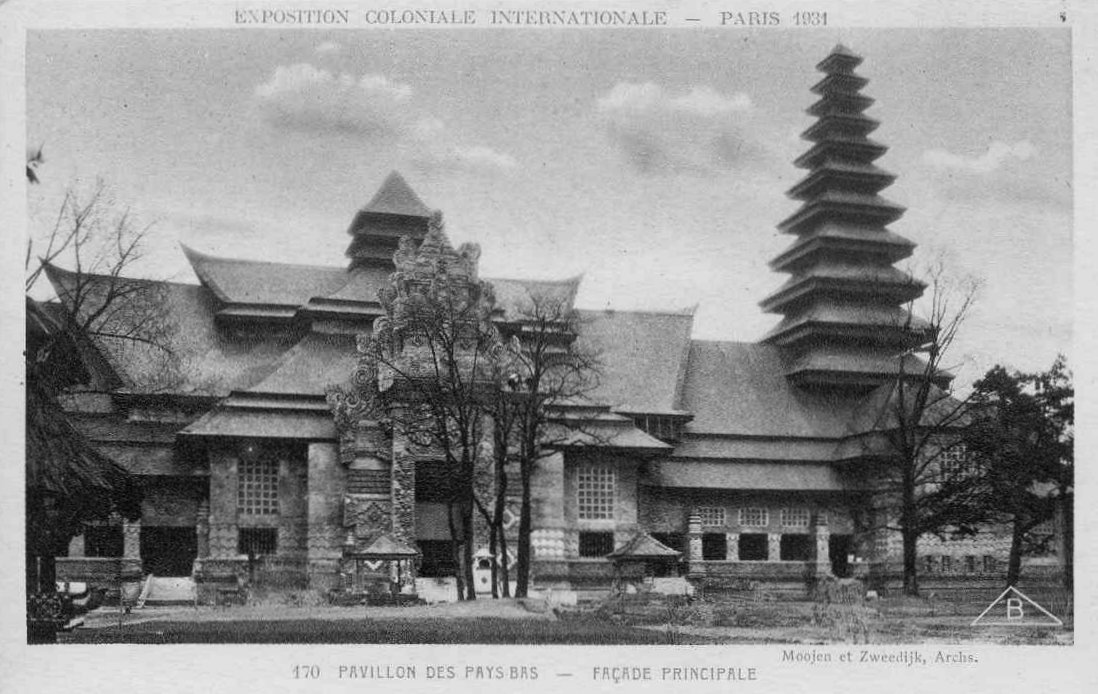
Last December, Whiteboard Journal reached out to me for an interview about trends and issues faced by architects in Indonesia. My answers to their questions were posted in entirety on the article. (Had I known the whole thing would be posted verbatim I wouldn’t have rambled TL;DR with my answers? Sorry, readers!!)
I decided to translate my answers here with edits for clarity, one post for each long answer. You can read the Bahasa Indonesia version on Whiteboard Journal, otherwise read more below.
WHITEBOARD: Do you think it’s possible to merge traditional and contemporary design without removing the originality of traditional design? If possible, how so?
Our understanding of what we call traditional, contemporary, or original in architecture needs further scrutiny. For example, when we speak of tradition, we may be thinking of “traditional houses” that are associated with cultural groups or areas in Indonesia. The more specific term we use in architectural studies is “vernacular housing”, which refers to culture-specific dwellings as identified by their form, building tectonics, or spatial conceptualisation. These vernacular houses may differ between cultural groups because they arise in response to local needs, resources, and wisdom (by which I mean the combination of skills and ideology).
Can we then consider our vernacular architecture as “original”? Many may claim so, but we have to recognise that in our vernacular cultures of building, knowledge is mainly transferred through rituals, stories, and oral history from master craftsmen to their apprentices and so on. Considering this method, the vernacular can be very fluid in response to different contexts, taking into account the different challenges faced by the people throughout time. So it is a misconception to think of tradition as something immutable, or as if it is set in stone.
The problem is, when we look at it from our contemporary standpoint, to whom does the traditional belong? And ethically, how far can contemporary architects adapt, let alone intervene, in tradition?
Our understanding of traditions will always be coloured by who documents and inserts them into academic discourse. For example, Balinese temples were introduced to the world during the 1931 Colonial Exposition[1] as a towering landmark of the Dutch East Indies pavilion, which showcased other exotic cultural objects from the colonised archipelago. Also, schoolchildren’s understanding of “traditional architecture”, especially those in my generation, had been by and large shaped by the existence and byproducts of Taman Mini Indonesia Indah. Conceived by Tien Soeharto, the theme park collected “rumah adat” or traditional houses that “belong to” various regions of Indonesia, re-presented in the form of illustrations and scale models. There are certain agendas behind the promotion and reproduction of these viewpoints, whether we intend and realise it or not.
In college, we studied this subject in a class called “Nusantara Architecture”, not “Traditional Indonesian Architecture”. This is because at the time when vernacular architecture was our dominant spatial formation, “Indonesia” was not yet a thing that existed. So, our understanding of tradition, traditional houses, and the like must be critical of its temporality, as well as question what parameters were in place, and what breakthroughs were enabled or are necessary.
So, to merge the past with the future, architects need to firstly understand architecture as a practice and knowledge that is tied to its era. Today’s architects also face specific challenges in articulating space and form, such as a regulation in Bali[3] that requires all public buildings to use traditional elements. If what we do is to merely copy and paste ornaments on our buildings, this would be a shallow exercise. Our contemporary architecture should be more meaningful than that.
*
FOOTNOTES
1 I mistakenly referred to this as the 1930s World’s Fair in the original interview. The pavilion is depicted in this post’s featured image.
2 Read Abidin Kusno’s Behind the Postcolonial: Architecture, urban space, and political cultures in Indonesia. This is a book that I desperately wish I had read during my undergraduate years.
3 See Regulation of the Province of Bali Number 5 of 2005 concerning Architectural Building Requirements, article 13 paragraph 1. Read the elucidation of said article too, which contains the lawmakers’ recap of Balinese architectural principles.
